

According to CoinDesk, in just a few days, a fraudulent malicious application of Ledger Live, distributed through Apple Stock, stole some $9.5 million worth of encrypted money from the accounts of more than 50 victims. X-user @glove posted that he had downloaded a malicious program disguised as an official Ledger application when he set up the new computer, resulting in the loss of 5.9 bitcoins accumulated over a decade. He said, “I lost my pension fund in a scam, and all my savings disappeared immediately.” The block chain investigator, ZachXBT, later traced the stolen 5.92 bitcoin, showing that the funds were quickly transferred to KuCoin ‘ s deposit address through a series of transactions, in line with the broader pattern of money-laundering found in the incident. Apple and KuCoin have not yet responded.
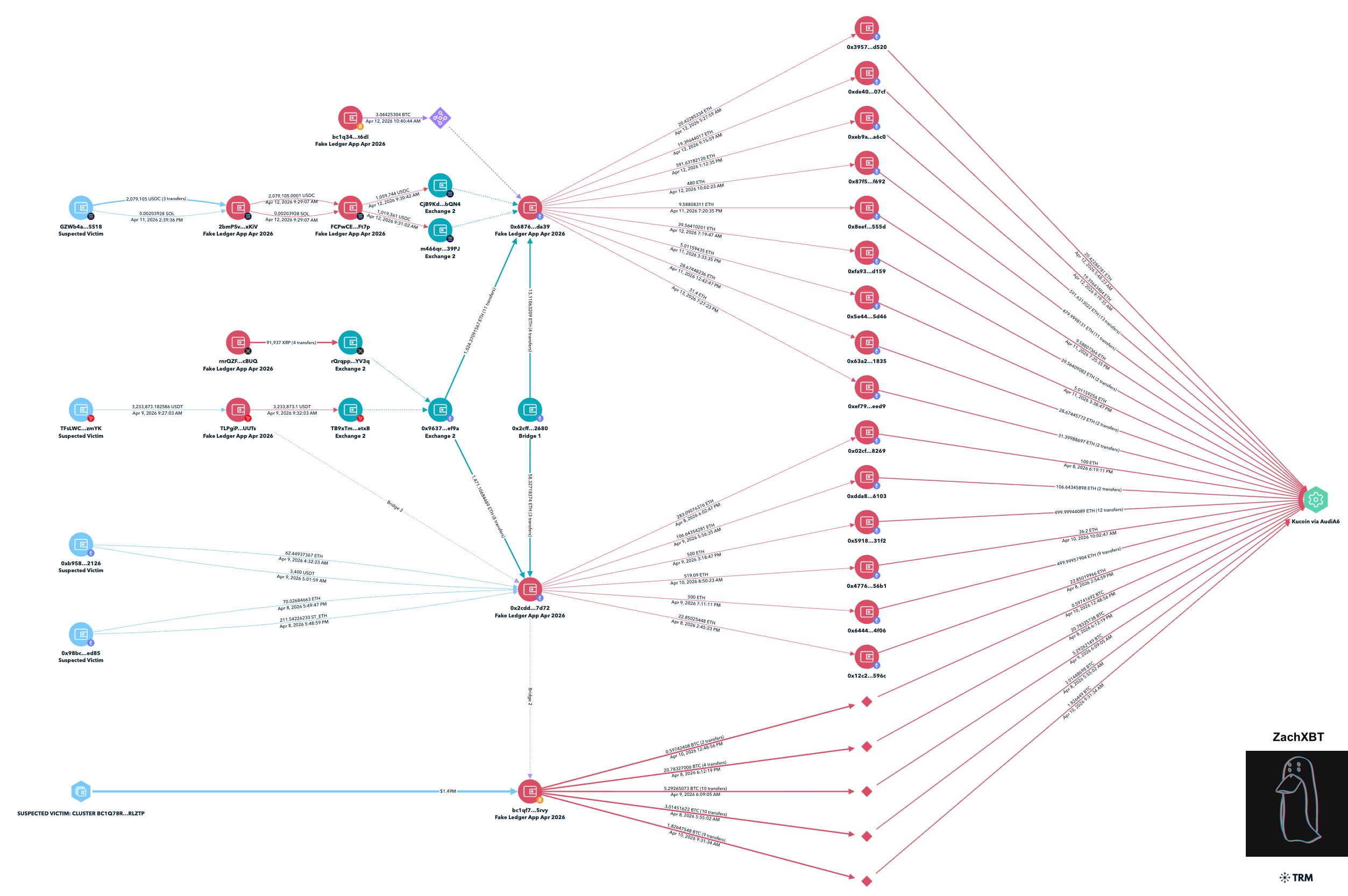
The fishing campaign, which was active between 7 and 13 April, resulted in more than 50 victims ‘ accounts in Bitcoin, Ethera, Solana, Tron and XRP, with cumulative losses of over $9.5 million. Three of the largest victims of these losses have stolen funds in excess of seven digits: USDT, $3.23 million, stolen on 9 April; USDC, $2.08 million, stolen on 11 April; and BTC, ETH and stETH, stolen on 8 April. Such cases often induce victims to enter recovery phrases in their application, thus giving the attackers complete control over their accounts. The stolen funds were transferred through more than 150 KuCoin deposit addresses and were linked to “AudiA6”, a central, encrypted money hybrid service known for collecting high fees to cover illicit financial flows. The reliance on the Centralized Exchange as a money-laundering hub was particularly notable in the light of the recent regulatory difficulties faced by KuCoin. In February 2026, the exchange was banned by the Austrian regulatory body from accepting new EU users for only a few months after obtaining MiCA licences; in 2025, it paid over $300 million to the United States authorities to settle money-laundering violations.
The apple has fallen off the Leedger Live fake application from App Store, but questions remain as to how it passed the audit and how long it went on. The large amount of the loss, combined with the fact that the application was distributed through the official Apple store, could expose the company to legal risk. ZachXBT suggested that the incident could have turned into a class action. The incident highlighted the continuing threat that has been plaguing the encrypted money industry for the past few years. In 2025, encrypted money investors lost approximately $17 billion as a result of hacker attacks and fraud, of which social engineering and cyber fishing were the main means of attack.